Cupping
A stiff neck that just will not loosen, a back that locks up after long days at a screen, or muscles that keep pulling after exercise. In cupping, cups with gentle suction are placed on the skin. The skin and underlying tissue are lifted slightly, rather than pressed as in massage.
60 minutes · € 60
What is cupping?
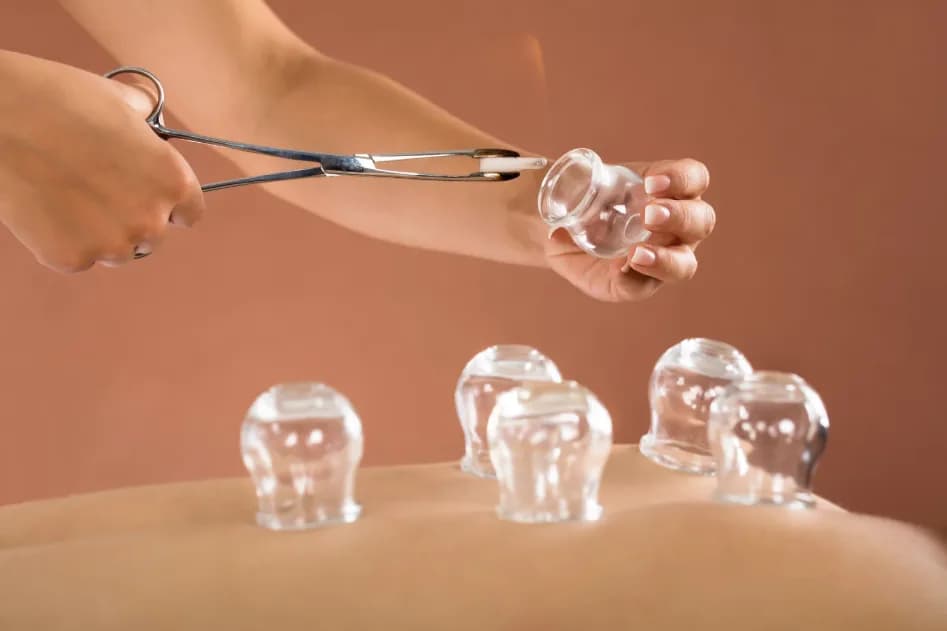
Cupping, Ba Guan in Chinese, is an age-old treatment from Traditional Chinese Medicine. Glass or silicone cups are placed on the skin and held in place by a vacuum. The suction lifts the skin, connective tissue (fascia) and upper muscle layers. This locally increases circulation in the area and can help release stuck tension.
The cups can stay in one place, or be moved over the skin with some oil. The latter is called sliding cupping and feels like a deep, pulling massage. Cupping is mainly applied to the back, shoulders, neck and legs.
After treatment, round red to purple marks are often visible where the cups were. These are not bruises from a knock, but a reaction of the small blood vessels to the suction. They are usually painless and fade within a few days to about a week.
Traditional Chinese Medicine
Cupping from a TCM perspective
In Traditional Chinese Medicine, pain and stiffness are often seen as stagnation: Qi and Blood do not flow freely through an area. Cupping is used to support that flow and to expel Cold, Wind or Damp from the muscles, for example with a stiff neck after a draught or a back that locks up in cold, damp weather.
At Bai Kang, cupping is usually combined with acupuncture or laser acupuncture. Acupuncture addresses the underlying pattern, cupping the tension in the muscles themselves. Cupping can also be booked as a separate treatment.
When is cupping used?
Cupping is mainly used for musculoskeletal complaints and tension. Common reasons to come are:
- Tense or stiff muscles in the neck, shoulders and back
- Back pain and a locked lower back
- Muscle soreness and stiffness after exercise
- Tension from stress or prolonged sitting
- A cold, heavy or sluggish feeling in the muscles
- As a complement to acupuncture for pain
What happens during a cupping treatment?
A treatment takes about an hour and always starts with a short conversation about your complaints, your health and any medication.
- 01You lie relaxed on the treatment table, usually on your stomach. Only the area to be treated, such as the back or shoulders, is uncovered.
- 02The cups are placed on the skin and held in place by a vacuum. The suction is adjusted to what feels comfortable for you.
- 03The cups stay in place for a few minutes or are moved over the skin with oil. You feel a pulling, warm sensation that most people find relaxing.
- 04Where appropriate, the treatment is combined with acupuncture, laser acupuncture or guasha.
Afterwards
Drink enough water after treatment and keep the treated area warm for the rest of the day. Avoid a hot bath, sauna or heavy exertion that day. The marks from the cups fade on their own.
Frequently Asked Questions
Does cupping hurt?
Most people experience cupping as a firm, pulling sensation that is relaxing. Tense areas can feel sensitive. The suction is always adjusted to what feels comfortable for you.
How long do the marks stay visible?
Usually a few days to about a week. The darker the mark, the longer it often takes. If you have an occasion soon where your back or shoulders will be visible, let us know in advance.
Can cupping be combined with acupuncture?
Yes, that is common. Acupuncture addresses the underlying pattern, cupping the tension in the muscles. Read more about acupuncture or see the complaints for which it is used.
Has cupping been researched?
Cupping has been researched for neck and back pain, among other things. Some studies describe less pain and stiffness, but the quality of the research varies. The degree of change people experience differs per person.
60 minutes · € 60
Tension that will not let go?
Book a cupping treatment or combine cupping with acupuncture. During the appointment we look at what suits you best.